


Hear from the scientists, conservationists and on-the-ground specialists working to bring the Darwin's frogs back from the brink of extinction.
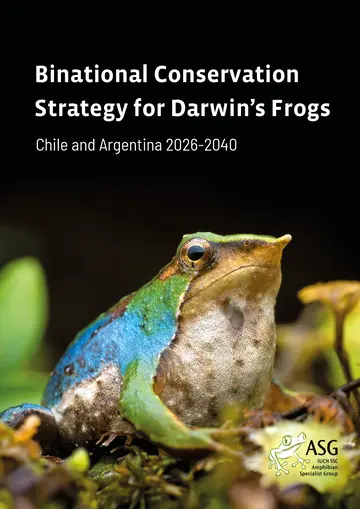
Working with more than 20 institutions from across the world, we are delighted to share the second edition of the Binational Strategy for the Conservation of Darwin's Frogs. This document will act as a roadmap to guide protection of these charismatic and threatened amphibians until 2040, as they face myriad threats from disease to habitat loss.
In this online webinar event, speakers will deliver short presentations on the work that led them to development of the strategy, the progress that has led to this stage, and the challenges faced along the way. A panel discussion will follow, including ample time for questions from the audience and an opportunity to learn how to join this binational conservation network.
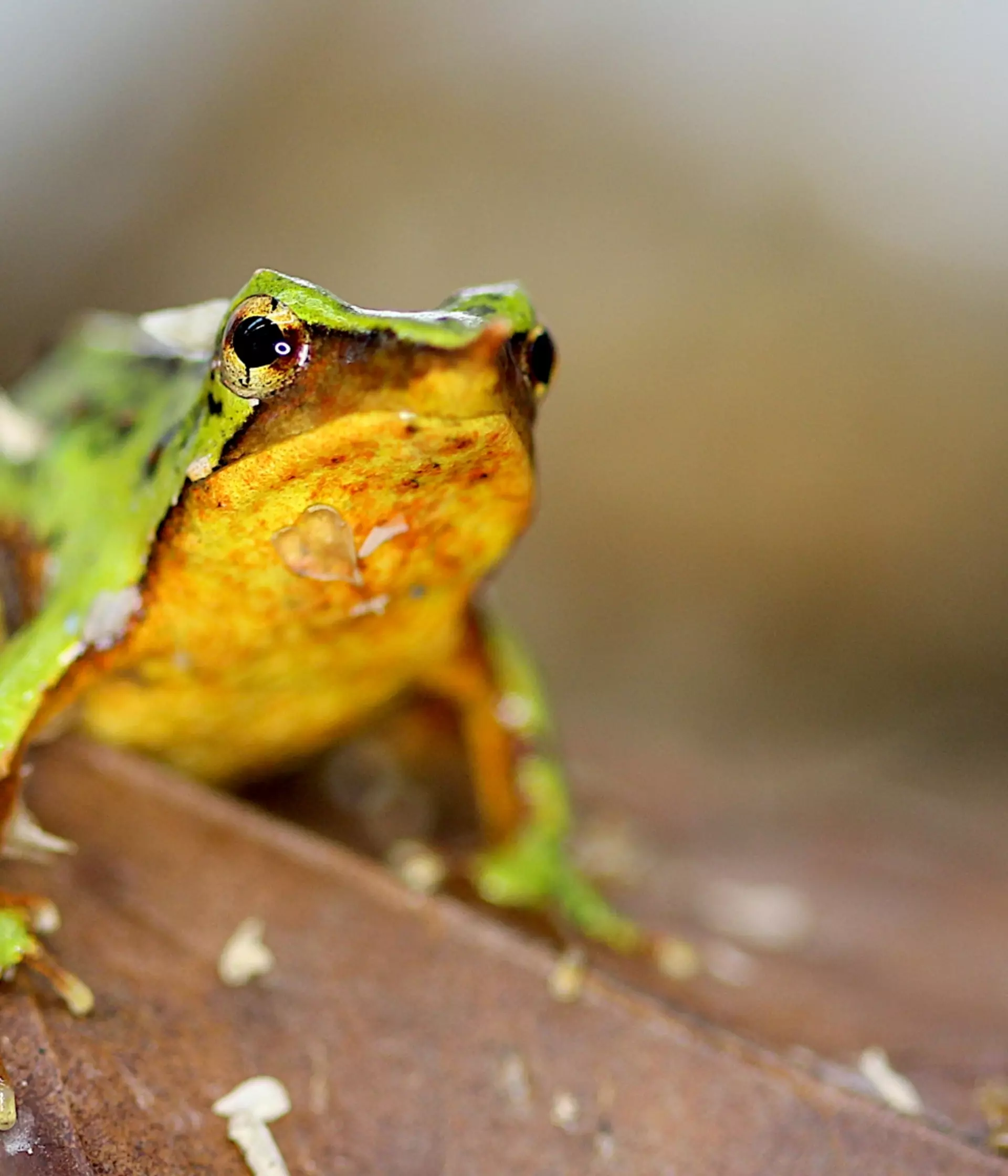
The strategy, which will be implemented between 2026 and 2040, consolidates more than a decade of collaborative work aimed at preventing the extinction of the two species known as Darwin's frogs; the southern Darwin's frog (Rhinoderma darwinii) and the northern Darwin's frog, or cow frog (R. rufum) - the latter not observed since 1981 and classified as Critically Endangered (Possibly Extinct). The strategy incorporates improvements to methodologies for protection of the species, and reaffirms the commitment of the diverse range of organisations dedicated to working collaboratively to prevent their extinction.
Darwin's frogs are the only known amphibians in which males raise tadpoles within their vocal sac, a parenting strategy which is unique, compared to the other 9,000 species of amphibians. These species inhabit the native forests of Chile and Argentina, ecosystems which face increasing pressures from habitat loss, climate change, and chytridiomycosis, an infectious disease that has decimated amphibian populations worldwide.
Please note this webinar has been rearranged to Wednesday 14th October (originally scheduled for Wednesday 23rd September). If you already had a booking to attend, this has automatically been moved to the new date.
Speakers and talks
Andrés Valenzuela-Sánchez, Research Fellow, Institute of Zoology, ZSL and President, NGO Ranita de Darwin - The history and development of the Binational Conservation Strategy, from its origins to the new 2026–2040 edition
Sally Wren, Co-Chair, IUCN SSC Amphibian Specialist Group - The importance of conservation planning in the context of global amphibian conservation and the role of the IUCN SSC Amphibian Specialist Group.
Claudio Azat, Co-Chair for Chile, IUCN SSC Amphibian Specialist Group and Director, One Health Institute, Universidad Andrés Bello, Chile - The significance of the Binational Strategy within the wider challenges and opportunities for amphibian conservation across Latin America
Ben Tapley, Curator of Amphibians and Reptiles, ZSL and Co-Chair, Captive Breeding Working Group, IUCN SSC Amphibian Specialist Group - How ex situ conservation can support species recovery as part of an integrated approach combining in situ conservation, research and population management
Learn more about the plight of the Darwin's Frog
To learn more about the threat of chytridiomycosis and the work being done to protect and restore Darwin’s frog populations, listen to the latest episode of the ZSL Wild Science Podcast: ZSL #053 - A Tiny Frog Facing an Urgent Crisis.
Find out more about the strategy
Read about the work of the organisations involved in developing the strategy, and how you can read a copy, on the strategy website: https://www.estrategiarhinoderma.org/en/segundaedicion
Attending this event
- This Science and Conservation Event is free to attend but registration is required so we can monitor attendee numbers. Reserve your free place to attend the webinar on Zoom.
- The event will feature talks from the speakers, followed by a Q&A discussion panel. It will run from 6-7:15pm and attendees will be admitted to the Zoom webinar shortly before 6pm.
- Recording disclaimer: The presentations and Q&A session will be filmed during this event, and the recording published on our Science and Conservation YouTube channel afterwards. Please be aware that by attending this event you consent to be filmed or your voice to be recorded during the Q&A session, which will be included in the published video.
Further Information
- Read the ZSL Science and Conservation Events sustainability guidance
- For enquiries about this event, please email scientific.events@zsl.org.
- For press enquiries, please contact the ZSL Press Office: press.office@zsl.org.
- Listen to our ZSL Wild Science podcast or subscribe on your favourite podcast app.
- Follow us on X @ZSLScience to hear about new publications from our researchers, upcoming events and podcast episode releases.
- Follow us on Facebook @ZSLScienceAndConservation to receive notifications about new events.
- To catch up on all our recorded previous events, you can subscribe to our YouTube channel.
- For more information about how to join the ZSL Fellowship programme and engage with a network of thousands who are shaping the future of conservation.